Air Freight vs Sea Freight from Bangladesh
Admin User · September 08, 2026 · 6 min read

Air Freight vs Sea Freight from Bangladesh: Which Is Better for Your Shipment?
Choosing the right international shipping method can directly affect your delivery time, logistics cost and customer satisfaction. For businesses in Bangladesh, air freight and sea freight are two of the most commonly considered options for international cargo.
But which one should you choose?
The answer depends on your shipment size, urgency, budget, destination and type of goods.
In this guide, we explain the key differences between air freight vs sea freight from Bangladesh so importers, exporters and business owners can make a practical decision.
What Is Air Freight?
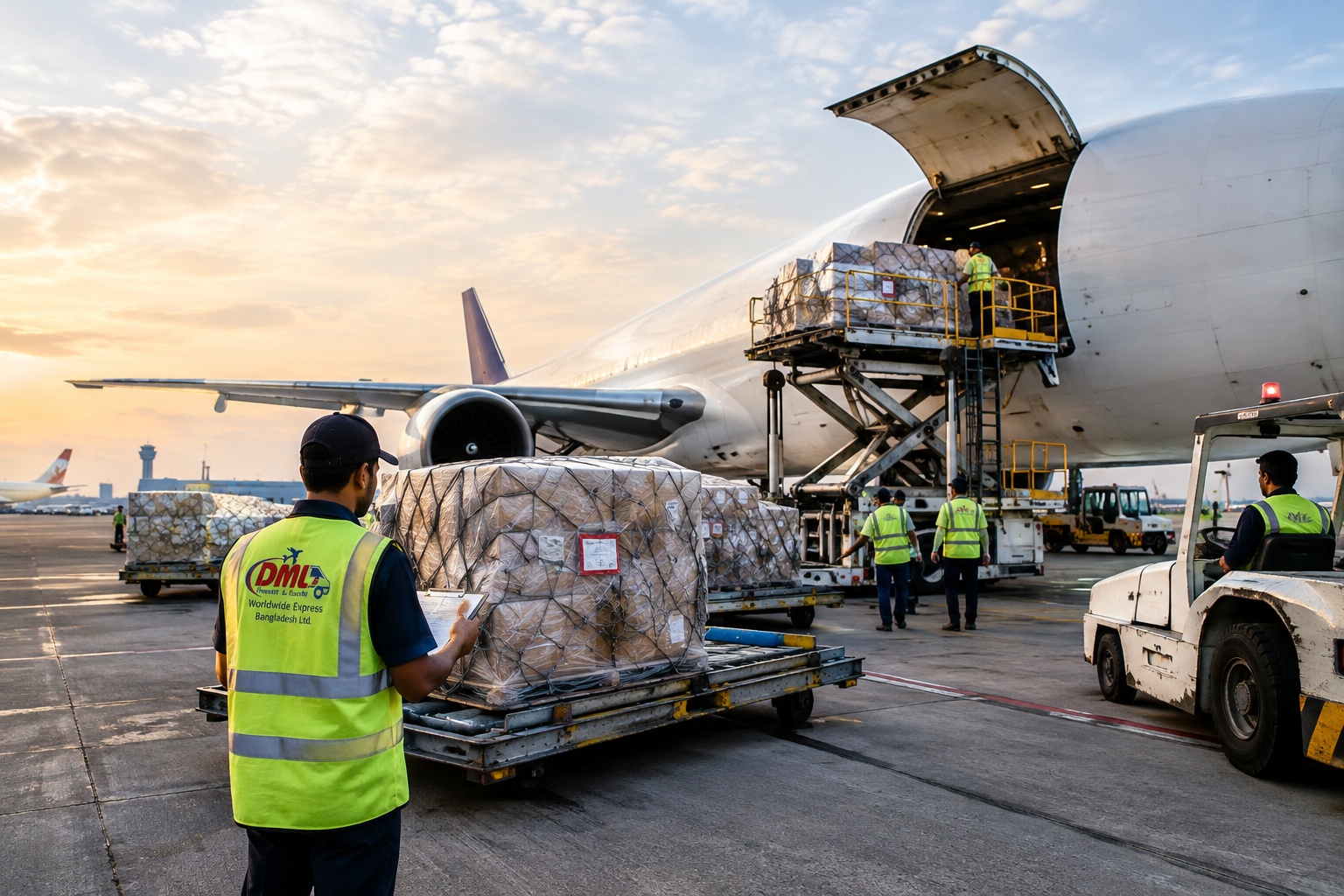
Air freight is the transportation of cargo by aircraft between airports.
It is generally selected when speed is a major priority. Businesses may use air cargo for documents, samples, electronics, garments, spare parts, commercial products and other shipments where faster transportation provides a business advantage.
For example, if a Bangladeshi exporter needs to send an urgent commercial shipment to the USA, UK, UAE or another international market, air freight may be more suitable than sea transportation.
Advantages of Air Freight
Faster international transportation
Suitable for urgent shipments
Useful for time-sensitive products
Better suited to smaller or medium-sized cargo
Easier to plan around required delivery schedules
Can reduce inventory waiting time
However, air freight usually costs more than sea freight, especially when the shipment is large or heavy.
What Is Sea Freight?
Sea freight, also known as ocean freight, transports cargo between countries using vessels.
It is commonly used for larger and heavier shipments where transportation cost is more important than delivery speed.
Businesses importing or exporting commercial quantities of products may consider sea freight when they have sufficient time for transportation.
Advantages of Sea Freight
Suitable for large shipments
Suitable for heavy cargo
Generally more economical for high-volume shipments
Useful for commercial import and export
Can accommodate different types of cargo
Practical when delivery is not extremely urgent
The main disadvantage is that sea freight generally takes longer than air freight.
Air Freight vs Sea Freight: Main Differences

The best option isn't simply the cheapest or fastest method. It should match the actual requirements of your shipment.
When Should You Choose Air Freight from Bangladesh?
Air freight can be a strong choice when delivery speed is more important than transportation cost.
Consider air freight if:
1. Your shipment is urgent
If your customer needs the goods quickly, waiting for sea transportation may not be practical.
2. You are sending samples
Exporters often need to send product samples to international buyers before receiving larger orders.
3. The cargo is relatively small
For smaller shipments, air transportation can be more practical depending on the shipment's chargeable weight and destination.
4. Your product is time-sensitive
Certain commercial products lose value when delivery is significantly delayed.
5. You need faster inventory movement
Businesses may use air freight to reduce the time between dispatch and receiving stock.
When Should You Choose Sea Freight from Bangladesh?
Sea freight is generally more appropriate when shipment volume is high and transportation cost is a major consideration.
Consider sea freight when:
You are shipping large quantities
Your cargo is heavy
Your shipment is not extremely urgent
You are planning regular commercial imports or exports
You want to manage transportation costs for larger cargo
You have sufficient time for the overall logistics process
For businesses handling regular international trade, sea freight can become an important part of their logistics strategy.
Which Is Cheaper: Air Freight or Sea Freight?
There is no single price that applies to every shipment.
The final transportation cost can depend on factors such as:
Origin
Destination
Cargo weight
Cargo volume
Chargeable weight
Type of goods
Packaging
Customs requirements
Pickup location
Delivery requirements
Applicable local and international charges
For a small and urgent shipment, air freight may provide better overall value despite its higher transportation cost.
For large commercial cargo, sea freight may provide a more economical solution.
Therefore, comparing the complete shipment cost—not only the freight rate—is important.
Air Freight vs Sea Freight for Bangladesh Exporters
Bangladesh exporters may need different transportation methods depending on their product and buyer requirements.
For example, an exporter sending product samples may prefer air freight because speed is important.
On the other hand, an exporter shipping a large commercial order may consider sea freight because shipment volume and transportation cost become more important.
The right decision should consider both buyer delivery requirements and total logistics cost.
Air Freight vs Sea Freight for Bangladesh Importers
Importers should also evaluate the urgency and quantity of their incoming goods.
If a business urgently needs spare parts, samples or selected commercial products, air freight may be appropriate.
For larger commercial orders where the business can plan inventory in advance, sea freight may be more suitable.
A good logistics plan should consider the entire supply chain, including customs clearance, documentation, local transportation and final delivery.
What About Customs Clearance?
Whether your cargo arrives by air or sea, proper documentation and customs procedures are important.
Depending on the shipment, documents can include commercial invoices, packing lists, transport documents and other supporting documents required for import or export processing.
This means choosing the transportation method is only one part of international logistics.
A shipment should be planned from pickup to customs clearance and final delivery.
How to Choose the Right Shipping Method
Before booking your shipment, ask these five questions:
1. How quickly does the shipment need to arrive?
If speed is critical, consider air freight.
2. How large and heavy is the shipment?
For large-volume cargo, sea freight may be more economical.
3. What is your logistics budget?
Compare the complete cost rather than only the basic freight charge.
4. What does your customer require?
Buyer deadlines can influence the best transportation method.
5. What is the total delivery process?
Consider pickup, documentation, customs clearance, transportation and final delivery.
Why Work With an Experienced Logistics Partner?
International shipping involves more than moving a package from Bangladesh to another country.
Businesses may need support with shipment planning, documentation, transportation coordination, customs clearance and delivery arrangements.
A logistics partner can help businesses evaluate available transportation options according to the shipment's destination, size, urgency and commercial requirements.
For companies looking for international shipping solutions from Bangladesh, DML Worldwide Express Bangladesh Ltd. provides courier, freight forwarding, air freight, sea freight and customs clearance services.
Final Decision: Air Freight or Sea Freight?
There is no universal winner between air freight and sea freight.
Choose air freight when:
Speed is your priority
Your shipment is relatively smaller
Delivery deadlines are tight
The cargo is time-sensitive
Choose sea freight when:
You are shipping larger volumes
Cargo weight or volume is significant
Transportation cost is a major concern
You have more time for delivery
The smartest approach is to compare speed, total cost, cargo size, destination and delivery requirements before making the booking decision.
For Bangladesh businesses, selecting the right freight method can help control logistics costs while maintaining reliable international delivery.
Admin User
admin@email.com
Related Articles